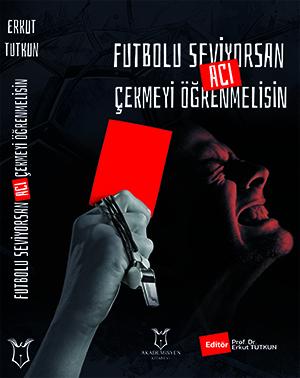
Futbolcu ve Ruh Sağlığı
Özet
Futbol, erken yaşlardan itibaren çocukların iç dünyası ile dış dünya arasında köprü kurarak onlarda yoğun duygular, başarı arzusu ve erken yaşta yüksek düzeyde stres yaratan dinamik bir süreçtir. Sporcuların profesyonelleşme yolculuğunda azim, tutku ve gelişim odaklı zihniyet yapısı, zorluklarla öğrenme fırsatı olarak yüzleşmeyi sağlayarak performansı ve uzun vadeli uzmanlaşmayı doğrudan olumlu etkilemektedir. Buna karşın, performansın stadyum, televizyon ve sosyal medya gibi kamusal alanlarda sergilenmesi; başkalarının olumsuz değerlendirmelerine maruz kalma riski nedeniyle başarısızlık korkusunu, utanç duygusunu ve performans anksiyetesini tetiklemektedir. Oyuncular yaşadıkları yoğun stresle baş edebilmek adına sıklıkla etkili olan problem veya duygu odaklı başa çıkma stratejileri yerine, kısa süreli fayda sağlayan fakat uzun vadede sorunun büyümesine yol açan kaçınma odaklı yöntemlere başvurmaktadır. Yeterli zihinsel sağlık desteğinin göz ardı edildiği futbol ortamında; sakatlık, istem dışı kariyer sonlanması, ağır performans beklentileri ve aşırı antrenman gibi faktörler sporcularda depresyon, anksiyete, yeme bozuklukları ve uyuşturucu madde kullanımı riskini belirgin şekilde artırmaktadır. Nitekim yapılan araştırmalar futbolcularda %26 oranında anksiyete ve depresyon belirtileri, %50 oranında ise yeme davranışında bozulma olduğunu ortaya koymaktadır. Bu ruhsal sorunların önüne geçebilmek amacıyla futbolcuların kulüp dışındaki ruh sağlığı uzmanlarından düzenli destek almaları, uyuşturucu kullanımına karşı caydırıcı taramalar ile psikoeğitimlerin düzenlenmesi, ebeveyn ve yöneticilerin gerçek dışı beklentilerini dengelemeleri ve sosyal medya etkileşimlerine sınır getirmeleri büyük önem taşımaktadır.
Football is a dynamic process that creates intense emotions, a desire for success, and high levels of stress from an early age by bridging children's inner and outer worlds. On players' journey toward professionalism, grit, passion, and a growth mindset positively influence performance and long-term expertise by enabling them to face challenges as learning opportunities. Conversely, performing in public spaces such as stadiums, television, and social media triggers fear of failure, feelings of shame, and performance anxiety due to the risk of negative evaluations from others. To cope with intense stress, players frequently resort to avoidance-focused strategies that provide short-term relief but exacerbate problems in the long run, rather than effective problem- or emotion-focused strategies. In a football environment where mental health support is often neglected, factors such as injuries, involuntary career termination, high performance expectations, and overtraining significantly increase the risks of depression, anxiety, eating disorders, and recreational drug use. Indeed, research reveals that football players exhibit a 26% prevalence of anxiety and depression symptoms and a 50% rate of impaired eating behavior. To address these psychological issues, it is crucial for players to receive regular support from independent mental health professionals, undergo frequent drug screenings accompanied by psychoeducation, balance parental and managerial expectations, and set boundaries regarding social media engagement.
Referanslar
Duckwort, A. (2016). Grit. The power of passion and perseverance. Scribner Book Company.
Dweck, C. S. (2012). Mindsets and human nature: Promoting change in the Middle East, the schoolyard, the racial divide, and willpower. American Psychologist, 67(8), 614–622. https://doi.org/10.1037/a0029783.
Sigmundsson, H.,Clemente,F.M. and Loftesnes,J.M. “Passion, (2020),Grit And Mindset In Football Players.” New Ideas İn Psychology 59: 100797.
Sigmundsson, H., et al. “Passion a key for success: Exploring motivational factors in football players.” New Ideas in Psychology 65 (2022): 100932.
Atkinson, J.W. (1957). Motivational determinants of risk-taking behavior. Psychological Review, 64, 359–372.
Sagar, S.S., Lavallee, D., & Spray, C. M. (2007). Why Young Elite Athletes Fear Failure: Consequences Of Failure. Journal of Sports Sciences, 25, 1171–1184.
Sagar, S.S., Lavallee, D., & Spray, C.M. (2009). Coping With The Effects Of Fear Of Failure: A Preliminary İnvestigation Of Young Elite Athletes. Journal of Clinical Sport Psychology, 3, 73–98.
Sagar, S.S., & Stoeber, J. (2009). Perfectionism, Fear Of Failure And Affective Responses To Success And Failure: The Central Role Of Fear Of Experiencing Shame And Embarrassment. Journal of Sport and Exercise Psychology, 31, 602–627
Conroy, D.E., Kaye, M.P., & Fifer, A.M. (2007). Cognitive Links Between Fear Of Failure And Perfectionism. Journal of Rational-Emotive & Cognitive Behavior Therapy, 25,237–253.
Lazarus, R.S. (2000). How Emotions İnfluence Performance In Competitive Sports. The Sport Psychologist, 14, 229–252
Gouttebarge, V., & Aoki, H. (2014). Lifespan Perspective Of Professional Footballers’health. Asian Journal of Sports Medicine, 5(4),
Babiss, LA.,Gangwich, JE. (2009). Sports Participation As A Protective Factor Agains Depression And Suicidal İdeation İn Adolescents As Mediated By Self-Esteem And Social Support. Journal of Developmental and Behavioral Pediatrics, 30, 376–384.
Gouttebarge, V., Backx, F., Aoki, H.,Kerkhoffs, G. (2015a). Symptoms Of Common Mental Disorders In Professional Football (Soccer) Across Five European Countries. Journal of Sports Science and Medicine, 14(4),811–818.
Rice, S.M., Purcell, R., De Silva, S., Mawren, D., McGorry, P.D., & Parker, A.G. (2016). The Mental Health Of Elite Athletes: A Narrative Systematic Review. Sport Medicine, 46,1333–1353.
Junge, Astrid, and Birgit Prinz. “Depression and anxiety symptoms in 17 teams of female football players including 10 German first league teams.” British journal of sports medicine 53.8 (2019): 471-477.
Wolanin, Andrew, Michael Gross, and Eugene Hong. “Depression in athletes: prevalence and risk factors.” Current sports medicine reports 14.1 (2015): 56-60.
Junge, A., and Feddermann-Demont,N., “Prevalence Of Depression And Anxiety İn Top-Level Male And Female Football Players.” BMJ Open Sport & Exercise Medicine 2.1 (2016): e000087.
European Monitoring Centre for Drugs and Drug Addiction. United Kingdom drug Situation 2001.http://annualreport.emcdda.eu.int/en/home-en.html(accessed 17Feb 2004).
Morse ED. Substance use in athletes. In: Baron DA, Reardon CL, Baron SH, editors. Clinical Sports Psychiatry: An International Perspective. Oxford, UK: Wiley; 2013.
Ceballos, Isabel Diaz, et al. “Eating Disorders İn Sports And Football: An Updated Review.” Cuadernos de psicologia del deporte 18.2 (2018): 43-56.
Gouttebarge, V., Aoki, H. and Kerkhoffs, G. (2015). Symptoms Of Common Mental Disorders And Adverse Health Behaviours İn Male Professonal Soccer Plyers. Journal of Human Kinetics, 49(1), 277-286.
Ericsson, K.A., & Charness, N. (1994). Expert Performance: Its Structure And Acquisition. American Psychologist, 49(8), 725–747
Ericsson, K.A., Prietula, M J., Cokely, E.T., & E,T. (2007). The Making Of An Expert. Harvard Business Review, 115–121.
Sigmundsson, Hermundur, et al. “Passion A Key For Success: Exploring Motivational Factors İn Football Players.” New Ideas in Psychology 65 (2022): 100932.
Duckworth, A.L., Kirby, T.A., Tsukayama, E., Berstein, H., & Ericsson, K.A. (2011). Deliberate Practice Spells Success: Why Grittier Competitors Triumph At The National Spelling Bee. Social Psychological and Personality Science, 2(2), 174–181.